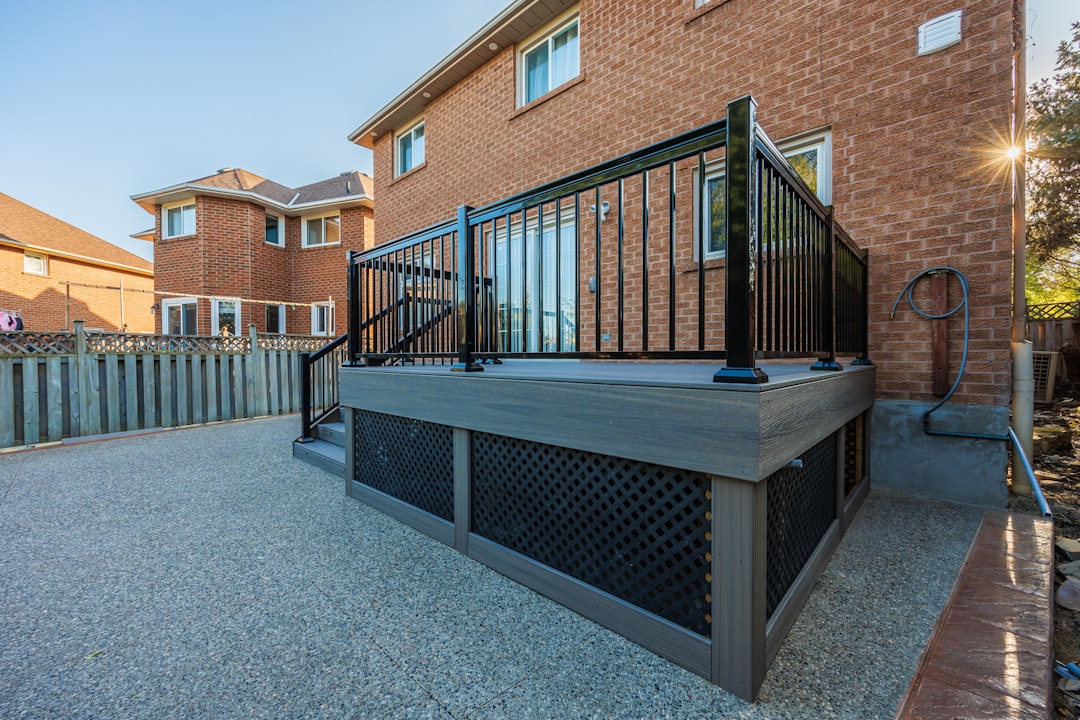
A well-built timber or composite deck extends your living space, adds value to your property, and becomes one of the most-used areas of your home. A poorly built deck — substandard timber, inadequate substructure, no ventilation, or the wrong material for the exposure — deteriorates rapidly, becomes a maintenance burden, and in some cases becomes structurally unsafe. South Africa's climate makes material choice and construction quality particularly important: UV radiation, temperature cycling, and seasonal moisture all act on outdoor timber structures year-round.
Decking material options
SA pine (pressure-treated) is the most affordable decking material and the most widely used in South Africa. Structural grade pine treated to H3 or H4 specification (the treatment class indicates the level of protection against rot and insects) is appropriate for above-ground decking. The deck boards and substructure should both be pressure-treated. Pine requires regular maintenance — oiling or sealing every one to two years — to prevent greying, cracking, and surface degradation. When properly maintained, a pine deck lasts fifteen to twenty-five years. When neglected, surface boards begin to split and warp within three to five years.
Balau is a tropical hardwood commonly used for premium decking in South Africa. It is significantly denser, harder, and more resistant to weathering than pine. Balau requires annual oiling but is more forgiving of missed maintenance cycles than pine. Its natural oils make it resistant to rot and insect attack without chemical treatment. It is more expensive than pine (both for the material and for the additional labour of working with a denser timber) but produces a higher quality result that lasts longer.
Garapa, Ipe (ironwood), and other tropical hardwoods are available through specialist timber suppliers for high-end applications. They are among the most durable decking options available — Ipe in particular has a sixty-year-plus service life — but come at significant cost and require carbide-tipped cutting tools during installation. These materials suit clients who want a premium, very long-lasting deck and are prepared to pay for it.
Composite decking is manufactured from a combination of wood fibres and recycled plastic. It requires no painting or oiling, resists fading and moisture, and is available in a range of realistic timber-look profiles. Quality varies enormously between brands — entry-level composites can fade significantly and develop surface mould; premium composites (Trex, Millboard, Timbertech, and locally available equivalents) perform very well. Composite decking costs more upfront than pine but its lower maintenance requirements can make it cost-competitive over a ten-to-fifteen year period. It is heavier than timber, which has substructure implications.
uPVC (cellular PVC) decking is an all-synthetic option with no organic content — it cannot rot, requires virtually no maintenance, and is highly resistant to UV and moisture. It is used primarily in very high-exposure applications (coastal decks, pool surrounds in constant contact with water and chlorine). It is the most expensive material option and has a different feel underfoot from timber.
The substructure — what most people do not ask about
The substructure (bearers, joists, posts, and footings) is what determines whether your deck remains structurally sound for its intended lifespan. It is also what is most often compromised in cheaper quotes, because it is hidden once the deck boards are laid.
Timber substructure: All structural members (posts, bearers, joists) must be pressure-treated pine at H4 specification minimum — or hardwood equivalent — to resist ground contact, moisture, and insect attack. H2 treatment (the standard for indoor structural timber) is insufficient for external substructure. Ask specifically what treatment class will be used for substructure timber.
Post footings: Deck posts must be set in concrete footings sized for the structural loads. Deck posts sitting directly on soil without footings, or on undersized footings, will move seasonally as the ground expands and contracts, causing the deck to become unlevel and its fixings to loosen.
Ventilation: Timber substructure must have adequate air circulation to allow moisture to dry between rain events. A substructure that is packed tightly against a slab or enclosed without ventilation will retain moisture and rot faster than one with airflow.
Joist spacing: Standard joist centres of 450mm or 400mm for 38mm boards, or 600mm maximum for thicker composite profiles. Under-spanned joists (too widely spaced) result in flex and bounce in the deck surface — an immediate quality issue and a longer-term fastener and board failure risk.
Fixings: Stainless steel or hot-dip galvanised joist hangers, post bases, and deck screws are required for durability. Untreated steel fixings rust, stain the deck surface, and weaken over time. Hidden fastener systems (where screws are concealed in the board groove rather than face-fixed through the surface) look better and eliminate the tripping hazard of surface screw heads — ask whether this is included.
Building plans and approval
In most South African municipalities, decks above a certain size or height above ground require building plans submission and approval. The threshold varies — in many municipalities, a deck higher than 500mm above ground level or larger than a certain area requires approved plans. Check your local municipality's requirements before construction begins.
Building plans approval is not a bureaucratic inconvenience: it confirms the structural design has been reviewed, ensures the deck is built in an approved location on the site, and protects you legally. A deck without approved plans can complicate property sales and may need to be demolished if it violates setback or height restrictions.
A contractor who dismisses the need for plans is either uninformed or trying to avoid the delay and cost of the approval process. Do not accept this — the responsibility for a non-compliant structure rests with the property owner, not the contractor.
Questions to ask before accepting a quote
What treatment class will the substructure timber be? H4 minimum for posts and below-ground contact; H3 minimum for above-ground exposed substructure. If the answer is vague or the contractor does not know what treatment class means, this is a concern.
What are the post footing dimensions and depth? You want concrete footings of adequate size, at least 400mm deep.
What is the joist spacing? 400–450mm centres for standard profiles is correct practice. Wider spacing to save on materials is a false economy.
What fixings will be used, and are they stainless steel or galvanised? The answer should be yes to one or the other — mild steel is not acceptable for external deck construction.
Are building plans included in the scope, or excluded? Many builders quote construction only and exclude plans preparation. Confirm who is responsible for building plans and approval before work begins.
What is your warranty on the workmanship? A reputable deck builder will stand behind their work. Ask for a minimum of two years on workmanship, and understand what it covers.
What to budget
SA pine deck (supply and build, per square metre): R1,200–R2,000/m²
Balau hardwood deck (per square metre): R2,000–R3,500/m²
Composite decking (mid-range brand, per square metre): R2,500–R4,500/m²
Premium composite or tropical hardwood (per square metre): R4,000–R7,000/m²
Balustrade and handrail (stainless steel cable rail, per linear metre): R2,500–R5,000/m
Structural engineer and building plans (typical residential deck): R5,000–R15,000
Stairs, built-in seating, lighting, and pergola structures add to the cost. Get these itemised in the quote so you can understand where the budget is going.
Red flags
Vague material specifications. A quote that says "timber deck" without specifying timber species, treatment class, and dimensions is not enough information to evaluate. Push for a full specification.
No mention of building plans for larger or elevated decks. As discussed above — this is a legal requirement in most municipalities.
Very short maintenance guarantee combined with low price. Some builders produce a deck that looks good at completion using undersized or underspecified substructure. The problems emerge in year two or three. A genuine two-year workmanship warranty indicates the builder is confident in their construction quality.
Painting pressure-treated pine instead of oiling. Pressure-treated pine should be finished with a penetrating oil designed for external timber — not painted. Paint peels from external timber as moisture cycles in and out, creating a maintenance nightmare. A contractor who proposes painting the deck surface is using the wrong finish.
Maintenance
Every timber deck requires ongoing maintenance. Pine decks need oiling every twelve to eighteen months; hardwood decks every twelve to twenty-four months depending on sun exposure. Composite decks require only cleaning. The maintenance product should be appropriate for the timber species and formulated for external, UV-exposed applications. Using the wrong product (an indoor oil on an outdoor deck, for example) produces poor results and may void any product warranty.
Inspect the deck annually for loose fixings, soft spots in the timber that indicate rot, and any areas where the finish has failed completely. Addressing these early is significantly cheaper than allowing deterioration to reach the substructure.
A well-specified, correctly built deck with proper ongoing maintenance is one of the best home improvements you can make in South Africa. Done right, it serves your household for twenty or more years and consistently ranks as one of the features that adds most value to a property at sale.