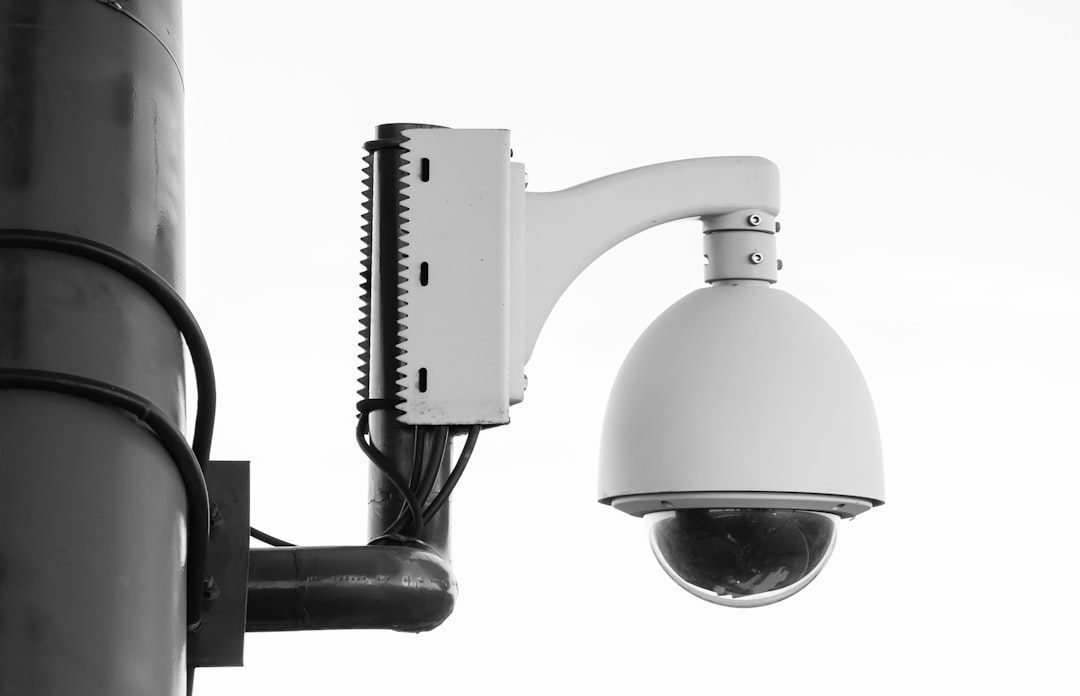
South African homeowners spend more on private security than almost any other country in the world. Armed response subscriptions, CCTV systems, electric fencing, security gates, panic buttons, alarm systems, and beams are layered onto residential properties in combinations that range from genuinely effective to security theatre — measures that create the appearance of security without meaningfully reducing risk. The two most commonly discussed residential security measures are armed response and CCTV. Both are widely sold, widely used, and widely misunderstood in terms of what they actually do and what their limitations are. The choice is rarely either/or — but understanding what each contributes clarifies how to spend your security budget effectively.
This guide compares armed response and CCTV directly — what each actually does, what it costs, where each falls short, and how effective combinations work in the South African context.
What Armed Response Actually Does
Armed response is a reactive security service. When an alarm is triggered — by a motion sensor, a door/window contact, a panic button, or a perimeter beam — the armed response company is notified and dispatches an armed officer to your property. The officer responds, assesses the situation, and takes appropriate action.
Key things armed response does not do: it does not prevent a crime from beginning. It does not guarantee that an intruder will not be inside your home before the officer arrives. It does not protect you during the response time gap — which in most South African suburbs is 4–12 minutes from alarm trigger to officer arrival, and longer in rural areas or during high-demand periods (late nights, public holidays).
What armed response is genuinely effective at: deterrence (visible armed response signage deters opportunistic crime), crime-in-progress response (an officer arriving while a crime is ongoing changes the situation), post-event assistance (managing the situation after an intrusion, coordinating with SAPS), and medical and fire emergency assistance (most armed response operators also respond to medical and fire calls).
Armed response works best when paired with an alarm system that triggers quickly and accurately. A slow-responding alarm (one that takes 30 seconds to trigger, another 60 seconds to communicate with the control room) narrows the response window considerably.
Cost: Armed response subscription fees in South Africa (2026): R350–R900/month depending on area, response time guarantee, and the number of callouts included. Most packages include a fixed number of false alarm callouts before additional charges apply. False alarms cost R200–R600 per call-out depending on the company.
What CCTV Actually Does
CCTV (closed-circuit television) is primarily a monitoring and deterrence tool. Cameras record what happens at your property and, in some configurations, stream live to a monitoring centre or your smartphone. What CCTV does well: evidential recording (footage of an incident for SAPS investigation and insurance purposes), deterrence of opportunistic criminals who see cameras and choose an easier target, and remote monitoring of your property when you are away.
What CCTV does not do: it does not stop a determined criminal. A criminal who has decided to act despite seeing cameras will proceed regardless. CCTV footage is useful after the fact — it documents the crime but does not prevent it. CCTV also does not generate a physical response — a camera that records a break-in does not call anyone or take any action unless it is connected to a monitoring service or smart detection system that alerts someone.
The effectiveness of CCTV depends heavily on camera quality, placement, storage (a camera that overwrites footage every 24 hours is useless for a crime discovered 48 hours later), and lighting. A low-resolution camera in poor lighting records unusable footage — technically "CCTV coverage" but practically worthless as evidence.
Cost: Entry-level CCTV system (4 cameras, basic DVR, self-monitored): R5,000–R12,000 installed. Mid-range system (6–8 cameras, NVR with remote access, good low-light cameras): R15,000–R35,000 installed. Premium system (4K cameras, AI-based smart detection, professional monitoring): R30,000–R80,000+. Monthly monitoring fees (where a control room watches live feeds): R400–R900/month.
Deterrence: The Most Underrated Security Value
The most significant crime prevention impact of both armed response and CCTV is deterrence — preventing crimes from being attempted in the first place. Opportunistic criminals (the majority of residential burglars) perform informal risk assessments before acting. Visible security measures increase perceived risk and shift their attention to easier targets.
Both armed response signage and visible camera presence contribute to this deterrence effect. Studies of residential crime consistently show that properties with visible security measures are less likely to be targeted than comparable properties without them, even when the measures themselves would not prevent a determined criminal.
The deterrence value of armed response is linked to the recognisability of the company's branding in the area. A well-known local armed response provider with frequent patrols in the area creates more deterrence than an unknown company with similar signage. Ask potential armed response companies how frequently their patrol vehicles pass through your street.
Smart Cameras and AI Detection: The Evolving Middle Ground
The gap between passive CCTV recording and active armed response is being filled by AI-based smart camera systems that detect humans, vehicles, or specific behaviours and trigger immediate alerts. These systems:
Send a push notification to your phone when a person is detected in a specific zone (your driveway, garden, perimeter). Some are connected to a professional monitoring centre that reviews the alert and dispatches armed response if the alert is a genuine threat. This effectively combines the evidential and monitoring value of CCTV with a faster, more targeted armed response trigger than a standard alarm system.
Popular smart camera platforms available in South Africa: Hikvision AcuSense, Dahua WizSense, and several local integration platforms. These typically cost 20–40% more than equivalent standard cameras but dramatically reduce false alarm rates — the cameras distinguish humans and vehicles from animals and vegetation movement, which are the main causes of false alarms in standard PIR-based alarm systems.
Building an Effective Layered System
The most effective residential security in South Africa is not one measure — it is a layered approach where each layer slows or detects an intruder before they reach the next layer:
Layer 1 — Perimeter: Electric fence, perimeter beams, or smart cameras detecting entry to the property before anyone reaches the house. This buys time for an alert and a response before the threat reaches the door.
Layer 2 — Access points: Burglar bars, security doors, quality locks on all access points. The physical delay in breaking through a secured door or window is real — most residential break-ins are opportunistic and the criminal will abort rather than spend 10 minutes trying to force a good security door.
Layer 3 — Interior detection: PIR motion sensors and door/window contacts linked to the alarm system. These trigger the armed response dispatch if the perimeter has been breached.
Layer 4 — Response: Armed response arrives. The value of each prior layer is that it gives the armed response more time to arrive before the criminal has completed their objective and left.
CCTV contributes at every layer — monitoring, evidential recording, and (with smart detection) triggering alerts at the perimeter before an alarm is triggered.
Quick Checklist for Your Home Security Review
- Assess your actual risk profile — what has happened in your suburb recently and what type of crime is most common?
- Check how frequently your armed response provider patrols your street — ask for the patrol frequency data
- Confirm your alarm response time guarantee in writing — and ask what it was last month in practice
- If considering CCTV, specify camera resolution and low-light capability before accepting a quote
- Check camera placement critically — are access points and the perimeter covered, not just the front garden?
- Consider smart detection cameras to reduce false alarms and improve alert quality
- Review your physical security (locks, bars, doors) — technology does not compensate for a weak physical layer
- Read reviews for security companies specifically mentioning response time performance in real incidents
Armed response and CCTV are not competing security measures — they serve complementary functions. Armed response provides a physical response; CCTV provides evidence and monitoring. Together, as part of a layered security approach, they are significantly more effective than either alone. What matters most is implementation quality: the right cameras in the right positions, and an armed response company with actual rapid response capability in your area. Reviews on KiesSlim for security companies in your area give you the real-world picture of response times and service reliability from people who have tested it under actual incident conditions.