Orthodontic treatment is one of the larger dental healthcare commitments most South African families make — both in time (18 months to three years of active treatment is common) and in cost (full orthodontic treatment typically runs from R25,000 to R65,000 or more depending on complexity and the type of appliance used). Most people bring less scrutiny to this decision than it deserves, given what is at stake.
Orthodontist vs Dentist — A Significant Distinction
A specialist orthodontist in South Africa is a dentist who has completed an additional two- to three-year postgraduate qualification in orthodontics at an accredited university, resulting in a Master of Dentistry (MChD) or Master of Science in Dentistry (MScDent) in Orthodontics. This specialist training is assessed and the practitioner is registered as a specialist with the HPCSA under the category of Orthodontics.
A general dentist can legally place braces in South Africa — there is no restriction preventing a dentist from offering orthodontic treatment. However, a general dentist who offers orthodontic services as part of their general practice has not completed specialist training and is not registered as a specialist. The quality of their orthodontic diagnosis and treatment planning may be adequate for straightforward cases but may not match the depth of a specialist for complex malocclusions, skeletal discrepancies, or cases requiring coordinated treatment with an oral surgeon or specialist periodontist.
Verify specialist registration on the HPCSA website. Search the practitioner and look for registration under the specialist category of Orthodontics. If the HPCSA record shows registration only as a general dentist, you are consulting with a dentist offering orthodontic services, not a registered orthodontic specialist. Knowing this before you accept a treatment plan helps you calibrate the weight you give to the recommendations.
When Is the Right Time to See an Orthodontist
The South African Society of Orthodontists recommends that children have their first orthodontic assessment by age seven. At this age, the first permanent molars and incisors have typically erupted enough to allow an orthodontist to assess jaw development, identify emerging alignment problems, and — where appropriate — intervene early to guide jaw growth in a way that reduces the complexity of later treatment.
Not every seven-year-old who sees an orthodontist will require early treatment. In many cases the assessment simply confirms that development is progressing normally and that no intervention is needed until the permanent teeth have fully erupted. The value of an early assessment is that it identifies the cases where early intervention is genuinely beneficial — expanding a narrow jaw before the palatal suture closes, for example, is possible in childhood but requires surgery in an adult.
For adults seeking orthodontic treatment, there is no age limit. Adult orthodontics has become increasingly common and increasingly sophisticated. The biological response to orthodontic forces is slightly slower in adults than children, making treatment timelines longer, but the outcomes are entirely comparable for well-planned cases.
What a Proper Orthodontic Assessment Includes
An initial orthodontic consultation should include a clinical examination of your teeth and bite, photographs (clinical photographs and smile photographs), dental x-rays including an OPG (full mouth panoramic x-ray showing all teeth and jaw structures) and a lateral cephalometric x-ray (a side-profile x-ray of the skull that allows analysis of jaw relationships and growth patterns), and in some practices a CBCT (cone beam CT scan) for complex cases requiring three-dimensional analysis.
Study models or digital scans of the teeth are taken to allow three-dimensional analysis of the bite and arch relationships. All of this diagnostic information is used to produce a diagnosis and a treatment plan that specifies what tooth movements are required, how they will be achieved, the expected treatment duration, and the retention protocol after active treatment.
The treatment plan should be explained to you in plain language — what the problem is, what the proposed solution is, why that specific approach is recommended over alternatives, and what the expected result will look like. A practitioner who presents a treatment plan without explaining the diagnosis and the reasoning behind the approach is asking you to accept treatment you do not understand. Ask questions until you do.
Treatment Options and What They Involve
Fixed metal braces remain the most common orthodontic appliance in South Africa and are appropriate for the full range of orthodontic complexity. They give the orthodontist precise three-dimensional control over tooth movement and are the benchmark against which other systems are compared.
Clear ceramic braces use tooth-coloured or clear brackets instead of metal, which makes them less visible. They work on the same principles as metal braces and are appropriate for similar levels of complexity. They are more expensive than metal braces and require more attention to maintenance to prevent staining.
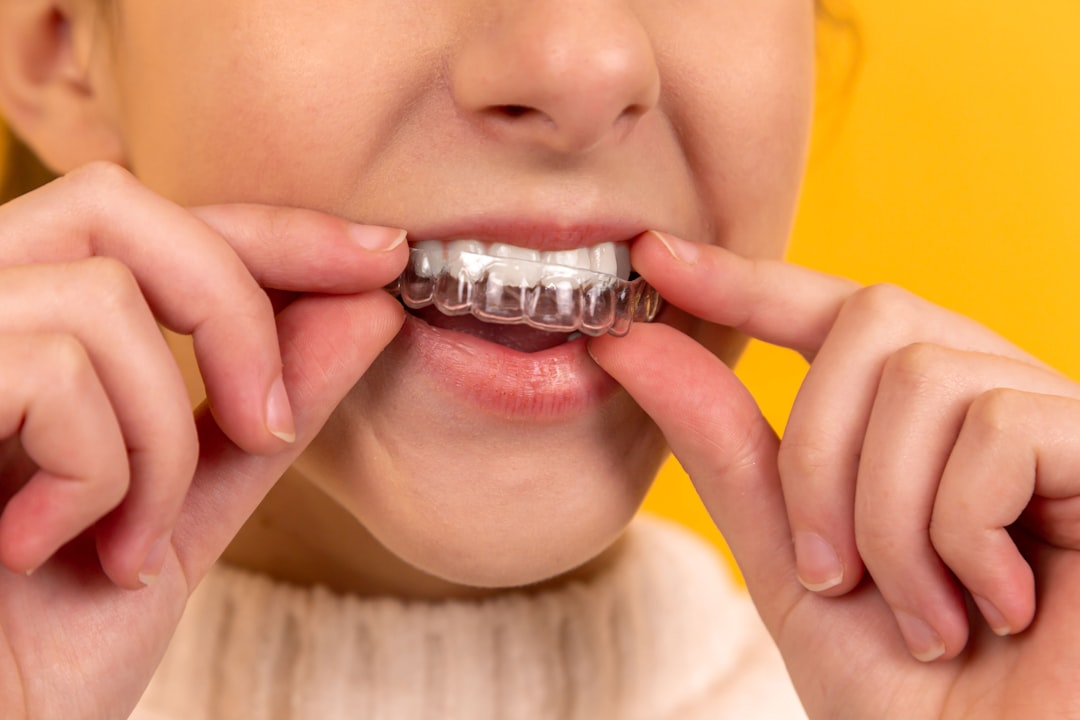
Clear aligner systems — Invisalign being the most widely known — use a series of custom-made clear plastic aligners to move teeth in planned increments. They are removable, which requires patient compliance (aligners must be worn 20–22 hours per day to work). They are less visible than fixed appliances and are appropriate for a wide range of cases, though for complex tooth movements, experienced orthodontists with extensive aligner training achieve better outcomes than generalists who offer aligners as a convenient product.
Lingual braces are fixed appliances placed on the inside surfaces of the teeth, making them invisible from the front. They are the most technically demanding appliance to place and adjust, and should only be used by orthodontists with specific lingual training and significant experience. They are also the most expensive option.
Medical Aid Coverage and What to Expect
Most South African medical aid schemes provide an orthodontic benefit, but the structure varies significantly. Many plans offer a once-in-a-lifetime orthodontic benefit — a fixed amount available only once during membership. Others offer a periodic benefit with conditions. The benefit typically covers a portion of the full treatment cost, with the balance charged as a co-payment.
Contact your medical aid before your first consultation and ask specifically: what is my orthodontic benefit, how much is available, and what conditions apply? Does the benefit require pre-authorisation? Is there an age restriction? Must the treating practitioner be a registered specialist? Getting these answers before the consultation means you can discuss the financial implications accurately with the practice from the start.
Orthodontic treatment is almost never fully covered by medical aid. Understanding the co-payment amount before committing to treatment helps you plan accordingly. Most practices offer payment plans — monthly instalments over the active treatment period — which makes the cost manageable for most families.
Red Flags to Watch For
A treatment plan presented without adequate diagnostic records. An orthodontic diagnosis without cephalometric x-rays, study models, and photographs is not a complete diagnosis. Treatment recommendations made on the basis of a clinical examination alone may miss jaw relationship problems, skeletal discrepancies, or tooth size discrepancies that significantly affect the treatment plan.
No discussion of retention. Retention — the period after active treatment during which retainers prevent teeth from shifting back — is as important as the active treatment itself. An orthodontist who does not explain their retention protocol in detail, and who does not make clear that orthodontic results require lifelong retainer wear to be maintained, is not providing complete informed consent for the treatment process.
Unusually short treatment timelines or guarantees about results. Orthodontic treatment duration is determined by the biology of tooth movement and the complexity of the case — it cannot be significantly accelerated without risk to root or bone health. Treatment plans promising 6-month full-case completion for complex cases, or guaranteeing specific cosmetic outcomes, should be questioned carefully.
Quick Checklist Before You Agree to Treatment
- Verify HPCSA specialist registration in Orthodontics — not just general dentist registration
- Confirm that diagnostic records include OPG, cephalometric x-ray, photographs, and study models or digital scans
- Ask for the diagnosis to be explained in plain language before any treatment plan is presented
- Understand the full cost, the medical aid contribution, and your co-payment before committing
- Ask specifically about the retention protocol and what is expected of you after active treatment ends
- Consider a second opinion for any complex case or any treatment plan that involves extractions or orthognathic surgery
- Ask about the payment plan structure — most practices offer monthly instalments over the treatment period
- Check reviews from patients who have completed treatment — outcome quality and how the practice handled problems during treatment are the most relevant indicators
Orthodontic treatment changes how you look and how you bite for the rest of your life — it deserves careful evaluation at the selection stage. Reviews from South Africans who have completed orthodontic treatment at specific practices can give you a realistic picture of what the experience is actually like over a two-year treatment course, not just in the first consultation. KiesSlim makes it easy to find and compare orthodontists near you based on real patient experiences.