Yoga and Pilates have both grown significantly in South Africa over the past decade, and with that growth has come a wide range of practitioners — from highly qualified, experienced instructors to people who completed a brief online course and opened a studio the following week. For someone new to either discipline, or someone who has been practicing for years and is looking for a new teacher, knowing how to evaluate an instructor and a studio can make the difference between a practice that genuinely benefits you and one that leads to frustration or injury.
Yoga vs Pilates — understanding what you are choosing
These two disciplines are distinct, though they are often grouped together and some studios offer both. Understanding the difference helps you identify what you actually need.
Yoga is a broad system of practice originating in India with many different styles. Hatha yoga is the foundational approach — slow, held postures focused on alignment and breath. Vinyasa (or flow yoga) links movement with breath in a more dynamic sequence. Ashtanga is a set sequence of postures practiced in a specific order, traditionally in a self-paced format. Iyengar yoga uses props extensively and emphasises precise alignment. Yin yoga holds postures for several minutes, targeting connective tissue rather than muscle. Restorative yoga is a passive, deeply supported practice using bolsters and blankets. Bikram or hot yoga is practiced in a heated room. Each style suits different bodies, temperaments, and goals.
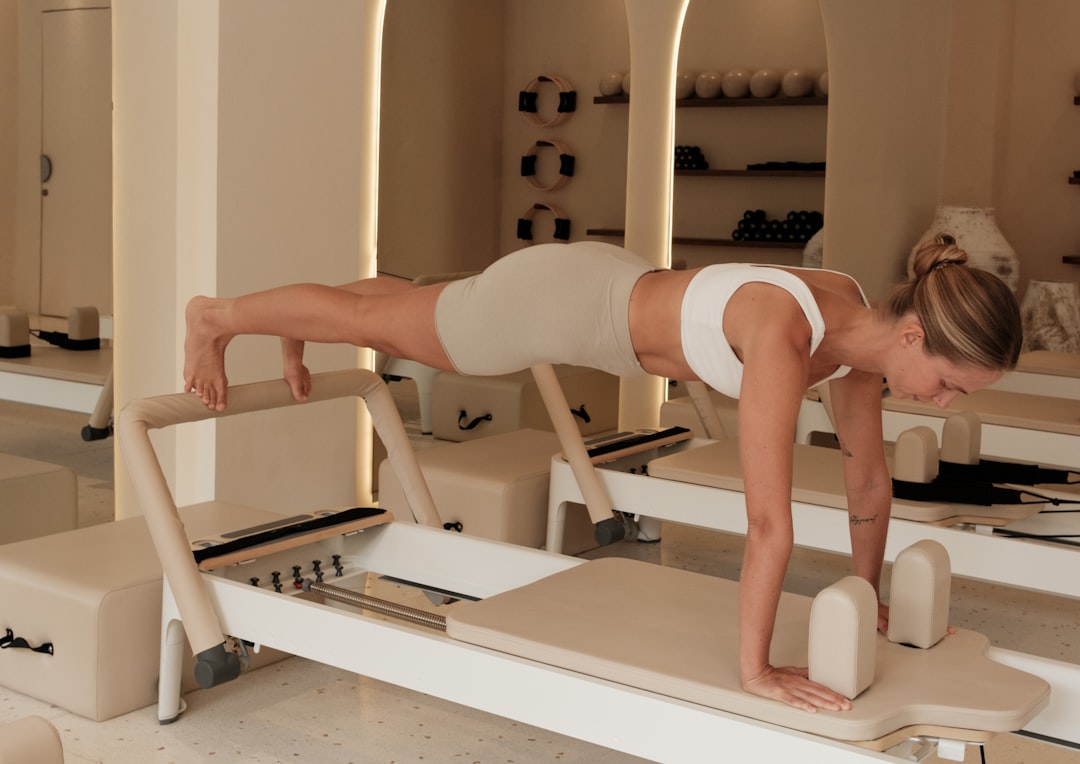
Pilates is a movement system developed by Joseph Pilates in the early twentieth century, focused on core strength, spinal alignment, and controlled movement. It is practiced either on a mat (using body weight) or on specialised equipment — the Reformer, Cadillac, Wunda Chair, and other apparatus. Reformer Pilates in particular has become very popular in South Africa. Pilates is widely used in rehabilitation settings because of its emphasis on precision and its ability to be adapted for injury or post-surgery recovery. It tends to be more linear and systematic than yoga.
Both can benefit posture, core strength, flexibility, and stress reduction. The right choice depends on what you are looking for — a meditative practice, a functional strength and mobility system, rehabilitation support, or an athletic challenge. Many people do both.
What qualifications actually mean
This is one of the more confusing aspects of choosing an instructor because the industry is not uniformly regulated in South Africa.
For yoga instructors, the most widely recognised qualification framework globally is the Yoga Alliance registry, which certifies teachers who have completed approved training programmes. A 200-hour Registered Yoga Teacher (RYT 200) is the baseline professional qualification — it represents a minimum of 200 hours of training covering teaching methodology, anatomy, philosophy, and practical instruction. A 500-hour RYT indicates more advanced training. Some instructors hold Yoga Alliance certification through training done locally (South African training schools are registered internationally) or abroad.
That said, Yoga Alliance certification is a qualification marker, not a guarantee of quality. Some excellent instructors have trained through non-Yoga Alliance programmes. What matters more than the specific credential is the length of the training, where it was done, and the instructor's ongoing professional development and experience.
For Pilates instructors, the most rigorous qualification path involves comprehensive training that covers all the classical Pilates apparatus and takes between 450 and 600+ hours to complete. Bodies like the Pilates Method Alliance (PMA) certify instructors through this comprehensive pathway. Mat-only Pilates certifications are shorter (sometimes as brief as a weekend course) and should be understood as limited in scope. An instructor teaching Reformer Pilates should have comprehensive training — not a mat certification applied to equipment they have been using for a short time.
In South Africa, look for instructors affiliated with Pilates South Africa or with established training lineages (Stott Pilates, BASI Pilates, and Peak Pilates are internationally recognised certification bodies with South African-trained graduates).
Always ask an instructor directly: where did you train, for how long, and do you continue to study or attend workshops? A professional who is growing their knowledge will answer this confidently and specifically.
Studio vs private sessions vs online
Group studio classes are the most accessible and affordable format. They range from general community classes to themed workshops and intensive series. The limitation is that the instructor cannot give you individualised attention — if your form is incorrect, you may practice a movement pattern incorrectly for weeks before anyone notices. Group classes are ideal once you have a foundational understanding of the practice.
Private sessions are significantly more expensive but give you the instructor's full attention. For beginners, for people with injuries or postural issues, or for anyone wanting to progress quickly, a series of private sessions to build a foundation is a worthwhile investment. Many instructors recommend starting with at least three to five private sessions before joining group classes, particularly for Pilates on apparatus.
Semi-private sessions (two to four people with one instructor) are a middle ground that many South African studios offer. You pay more than a group class but less than a private, and you still receive more individual attention than in a large group.
Online classes have become widely available since 2020. They are useful for supplementing in-person practice, for travel periods, or for people in areas with limited access to studios. They are not ideal for beginners who need hands-on correction, or for Reformer Pilates where the equipment is studio-based.
What to look for in a first class
Attend a trial class before committing to a package or membership. During the class, pay attention to the following.
How does the instructor handle beginners or modified needs? A good instructor will acknowledge new students before or at the start of class, ask about injuries, and offer modifications during practice without singling anyone out uncomfortably. Watch how they respond to a student who cannot perform a posture — do they offer an accessible alternative, or do they move on?
Is the cuing clear and anatomically precise? Vague instructions like "lift your chest" or "engage your core" without any further context are not helpful for most students. Experienced instructors give layered cues — the movement, the muscle engagement, the breath, the focal point — building them gradually through the class.
Does the instructor watch the class, or perform alongside it? A teacher who is doing the practice alongside students is not watching their students. Observation is fundamental to teaching. An instructor who moves around the room, adjusts students when appropriate, and makes eye contact is actively teaching — not demonstrating.
How does the class flow? Classes should have a clear arc — warm-up, build, peak, cool-down or integration. A class that jumps straight into intense practice without preparation, or ends abruptly without adequate closing, reflects poor structure.
Is the space clean and well-maintained? For mat-based practices, studio hygiene matters. Equipment should be clean, props should be in good condition, and the space should feel considered and calm.
What to budget
South African prices vary by city, studio positioning, and instructor experience.
Group yoga class (drop-in): R120–R220
Group yoga class (monthly unlimited membership): R700–R1,400 per month
Group mat Pilates class: R130–R220
Group Reformer Pilates class: R250–R500 per class
Private yoga session (1 hour): R400–R900
Private Reformer Pilates session (1 hour): R500–R1,200
Reformer Pilates is more expensive than yoga because the equipment is costly (a quality Reformer costs R30,000–R120,000) and class sizes are necessarily small to allow individual supervision. Studios that charge at the low end for Reformer classes are typically running large groups on equipment — less individual attention than you might expect.
Specific considerations for people with injuries
Both yoga and Pilates are frequently recommended for recovery from back pain, knee injuries, hip issues, and postoperative rehabilitation. However, not all instructors are qualified to work with clinical populations.
If you have a specific injury or medical condition, look for an instructor who has post-graduate training in therapeutic yoga or clinical Pilates, or who works in close conjunction with physiotherapists. Ask directly: have you worked with clients who have my specific condition, and how do you approach it?
It is also worth getting clearance from your physiotherapist or treating doctor before beginning any new physical practice if you are post-surgery or managing a structural issue. A good instructor will welcome this collaboration, not resist it.
Red flags
No trial class or introductory offer. A studio that requires you to buy a full package before experiencing the teaching is prioritising revenue over your needs. Most reputable studios offer at least one trial class or a discounted introductory series.
Vague qualifications. "I have been practicing for fifteen years" is not a qualification. Ask specifically about training programme, duration, and any continuing education. Enthusiasm and personal practice history, while valuable, do not replace formal training.
Overpromised outcomes. Be cautious of any instructor or studio claiming that yoga or Pilates can cure specific medical conditions, reverse chronic disease, or produce dramatic physical transformation in a short time. Both are genuinely beneficial practices with real, evidence-based benefits — and legitimate instructors do not need to oversell them.
Classes that are too large for the format. A Reformer Pilates class with twelve students and one instructor cannot be taught safely — the instructor cannot watch everyone on apparatus simultaneously. Six to eight students per instructor is the maximum for responsible group Reformer teaching. For mat classes, ten to fifteen is reasonable; beyond twenty students, individual attention becomes minimal.
Building a practice
The most important factor in whether yoga or Pilates benefits you is consistency. Two sessions per week over six months will produce genuinely noticeable changes in strength, flexibility, posture, and stress levels. One session per week for two weeks, followed by a gap, will not.
Finding an instructor whose teaching style and personality you connect with matters as much as their technical qualifications, because you are more likely to keep showing up for a teacher you enjoy learning from. If after three or four sessions a class feels like an obligation rather than something you look forward to, try a different instructor or style before concluding the practice is not for you.
The right teacher, the right style, and the right commitment are all it takes.