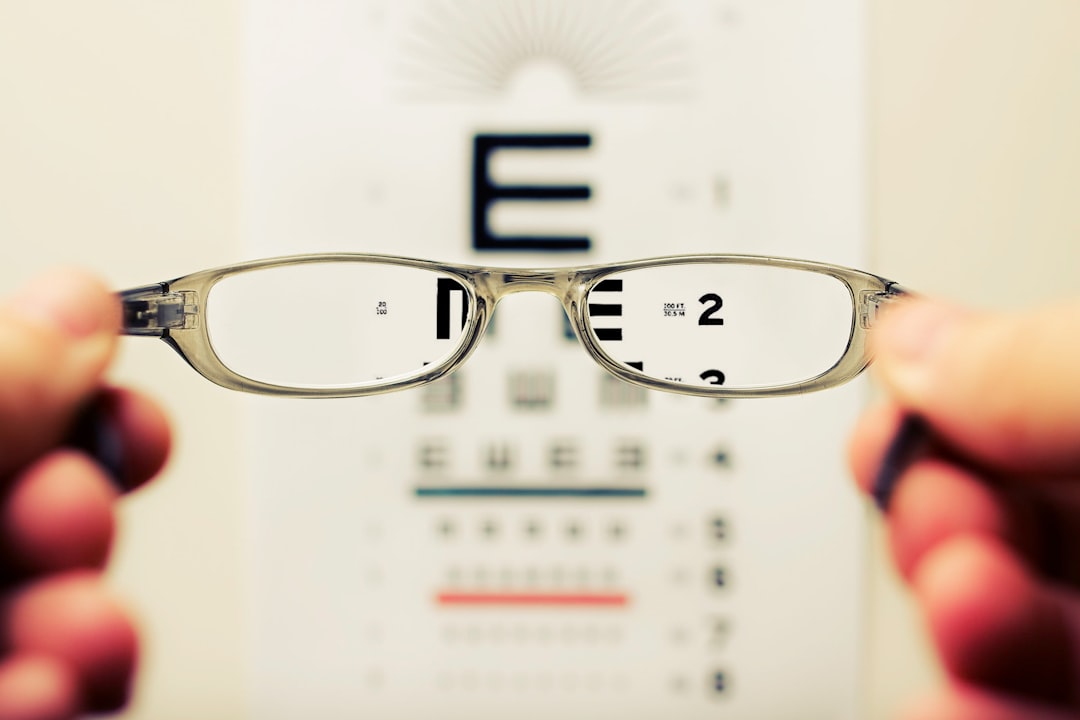
Most South Africans visit an optometrist for one reason: they need new glasses or contact lenses. But the value of a good optometrist extends well beyond refraction. A thorough eye examination screens for glaucoma, early diabetic retinopathy, macular degeneration, and hypertensive changes in the retinal blood vessels — conditions that, detected early, are manageable; detected late, cause permanent vision loss. The difference between an optometrist who runs a 15-minute prescription update and one who conducts a comprehensive ocular health examination could, over the course of your life, be the difference between catching something early and losing vision. Most patients cannot tell the difference between the two appointments — which is exactly the problem this guide is designed to address.
This guide covers what to look for when choosing an optometrist in South Africa, what a proper eye examination includes, how to verify registration and qualifications, and what questions to ask before you sit in the chair.
Registration: The Starting Point
Optometrists in South Africa must be registered with the Health Professions Council of South Africa (HPCSA) under the Optometry and Dispensing Opticians Board. This is a legal requirement. An optometrist completes a four-year Bachelor of Optometry degree (or the newer Doctor of Optometry degree at some institutions), followed by a practical examination and registration with the HPCSA.
You can verify any optometrist's registration on the HPCSA website in under a minute. Registered optometrists can diagnose and manage ocular conditions, prescribe corrective lenses, and refer to ophthalmologists for conditions requiring surgical or medical intervention. A dispensing optician (a separate registration category) fits and adjusts frames and lenses but cannot perform eye examinations or diagnose conditions. These are different roles — make sure you know which you are dealing with.
Spectacle frame sellers and opticians in malls sometimes use language that blurs this distinction. A "vision test" conducted by a non-registered individual at a frame counter is not an eye examination — it is a basic refraction check with no health screening component. For a thorough ocular health assessment, you need a registered optometrist, not a frame fitter.
Independent Optometrist vs National Chain: What the Difference Means
South Africa's optometry market includes large national chains (Spec-Savers, Vision Works, Torga, and others) and thousands of independent practices. Both can deliver excellent care. The structural difference is relevant to your decision.
National chains often offer lower-price entry-level frames and lenses, driven by volume purchasing. Their examination quality varies by individual optometrist — the brand does not standardise clinical depth, only pricing and frame inventory. An excellent optometrist at a national chain is an excellent optometrist; a rushed one is still a rushed one regardless of the branding on the door.
Independent optometrists often invest more in specialised equipment (OCT scanners, corneal topographers, visual field analysers) because their practice reputation depends on clinical quality rather than frame sales volume. They are also more likely to offer specialty services — contact lens fitting for difficult prescriptions, orthokeratology, myopia management for children, low vision rehabilitation. If you have a complex visual need, an independent practice with the right equipment is often worth the additional cost.
What matters most is the individual practitioner and the equipment available in the practice, not the franchise affiliation.
What a Proper Eye Examination Includes
A thorough eye examination in South Africa takes 30–45 minutes. If your appointment is consistently shorter than 25 minutes, you are likely receiving a partial examination. Here is what a comprehensive exam should cover:
Case history: The optometrist should ask about your visual complaints, general health history (diabetes, hypertension, medications), family eye health history (glaucoma, macular degeneration), and occupational visual demands. This context affects both the examination and the management plan.
Visual acuity: Testing how clearly you see at distance and near, with and without your current correction.
Refraction: Determining your spectacle or contact lens prescription. This includes both objective (automated or retinoscopy) and subjective (patient response) methods.
Binocular vision assessment: How well your two eyes work together. Binocular vision problems cause symptoms that pure refraction misses — headaches, reading fatigue, double vision, poor depth perception.
Intraocular pressure measurement: Elevated IOP is a key risk factor for glaucoma. Measurement should be included in any comprehensive exam. The air puff method (non-contact tonometry) is common; contact tonometry with a slit lamp is more accurate for borderline cases.
Anterior eye examination (slit lamp): Assessment of the cornea, lens, and anterior chamber for conditions including dry eye, cataracts, and anterior uveitis.
Posterior eye examination (fundoscopy): Direct examination of the retina, optic nerve, and blood vessels. This is where diabetic retinopathy, glaucomatous optic nerve damage, macular degeneration, and hypertensive retinopathy are detected. Many budget-end practices skip or abbreviate this step. It is the most health-significant part of the examination.
Visual field testing and OCT (optical coherence tomography) scanning may be additional procedures recommended based on age, risk factors, or findings during the examination. These are not always included in the base examination fee.
Questions to Ask Before You Book
Call or email the practice before booking to ask:
"Does the comprehensive examination include a retinal examination?" If the answer is yes but only with dilation (which takes extra time) or with an additional fee, that is acceptable — dilation does allow better fundoscopy. If retinal examination is simply not part of the standard exam, this is a clinical gap.
"Do you have an OCT scanner on-site?" OCT (optical coherence tomography) is a non-invasive imaging technology that allows cross-sectional imaging of the retina and optic nerve. It detects early glaucoma and early macular degeneration years before they are visible on fundoscopy alone. For patients over 40, those with a family history of glaucoma or AMD, or diabetics, OCT is the gold standard. Not all practices have this equipment — knowing upfront helps you choose appropriately.
"How long is the examination appointment?" Anything under 30 minutes for an initial comprehensive examination should prompt further questions.
"Are you happy for me to take my prescription away without purchasing frames here?" Legally in South Africa, an optometrist is required to give you your written prescription on request. If a practice is reluctant or makes this difficult, this is a red flag about their business practices.
Medical Aid Considerations
Most South African medical aid schemes provide a benefit for optometry, typically covering one eye test per year (or every two years depending on the scheme) and a frame and lens benefit. The frame benefit is almost always insufficient to cover premium frames — expect to top up from your own pocket for anything better than a basic frame.
HPCSA-registered optometrists can claim directly from medical aids using relevant tariff codes. Confirm before your appointment that the practice accepts your medical aid and bills directly — some practices require upfront payment and provide you with a receipt to claim back yourself.
Self-pay examination rates in South Africa (2026): R350–R700 for a standard comprehensive eye examination at most practices. Specialist examinations (contact lens fitting, visual field analysis, OCT) may add R200–R600 per procedure.
Children's Eye Examinations
Children should have their first eye examination by age three and before starting school. Vision problems in young children — amblyopia (lazy eye), strabismus (squint), high uncorrected refractive errors — are significantly more treatable if detected early. Once the visual system matures (typically around age seven to eight), the window for treating amblyopia closes substantially.
Many optometry practices see children. For complex paediatric vision cases — children with developmental delays, suspected strabismus, or vision therapy needs — ask whether the optometrist has experience with paediatric patients specifically, or whether they can refer to a paediatric optometrist or ophthalmologist.
Quick Checklist Before You Book
- Verify HPCSA registration before attending any optometry practice
- Confirm the examination includes fundoscopy (retinal examination) as standard
- Ask whether the practice has OCT scanning if you are over 40 or have risk factors
- Confirm appointment duration — aim for 30–45 minutes for a comprehensive exam
- Check medical aid acceptance and direct billing before the appointment
- Know that you are legally entitled to your written prescription without purchasing frames
- For children under 7, prioritise early detection — do not wait for a school vision screening
- Read reviews before booking — clinical thoroughness and communication quality show up clearly in patient feedback
Vision is one of the things most people take for granted until it is compromised. An optometrist who takes the health screening component of your examination as seriously as the refraction component is the practitioner worth staying with long-term. Finding that person takes a little more effort upfront than walking into the nearest shopping centre practice — but the difference in the quality of care you receive is real. Patient reviews on KiesSlim for optometry practices in your area give you the best available picture of what the experience is actually like before you book.