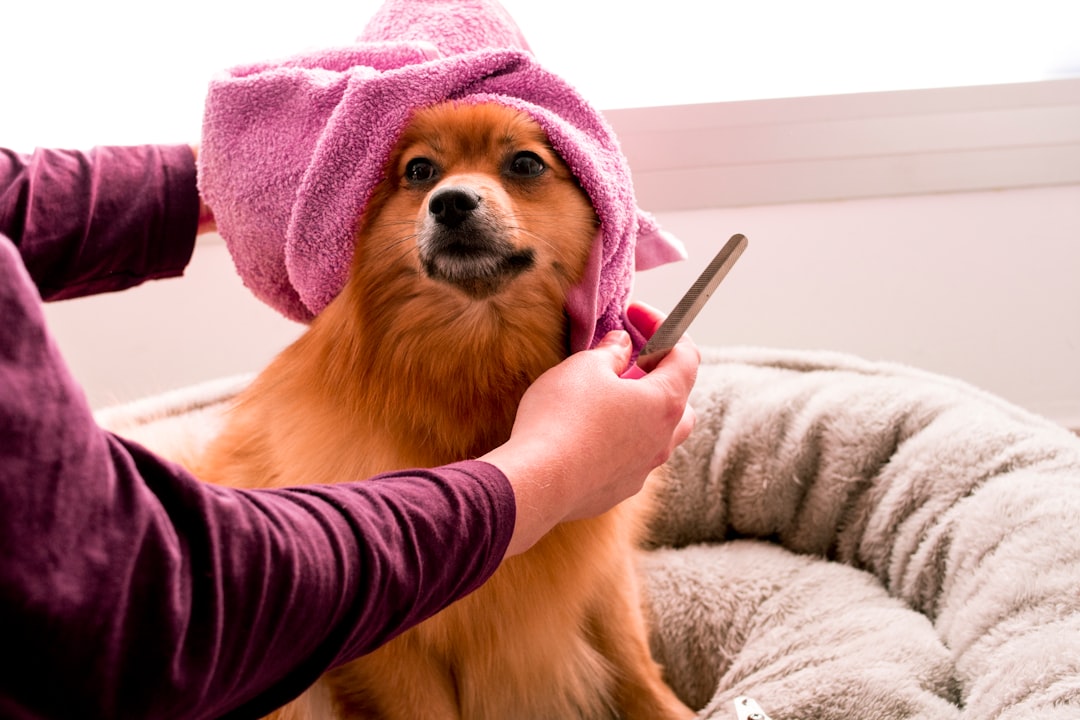
Dog grooming is one of those services where the price range is genuinely wide — and where paying too little can have consequences beyond a bad haircut. An inexperienced groomer can nick a dog with clippers, miss ear infections developing under matted fur, or handle an anxious dog in ways that cause lasting behavioural issues around grooming. Paying too much, on the other hand, is easy to do when you have no benchmark and the groomer knows it. Knowing what dog grooming should reasonably cost in South Africa gives you a starting point for evaluating quotes and identifying when a price is suspiciously low or unjustifiably high.
Basic Grooming Services and Price Ranges
Grooming prices in South Africa are driven primarily by coat type and condition, the size of the dog, and the specific services included. Most groomers offer a "full groom" package as their core service. For a small, short-coated dog (like a Jack Russell or Dachshund), a full groom — bath, blow-dry, nail clip, ear clean, and tidy — typically costs R250–R400. For a medium-sized dog with a standard coat (Labrador, Staffie, Boxer): R350–R550. For large dogs: R500–R750.
Dogs with coat types that require more complex grooming — Poodles, Maltese, Shih Tzus, Schnauzers, Lhasa Apsos, Bichons, Cocker Spaniels, and similar breeds — cost significantly more because the groom takes longer and requires scissoring and breed-specific styling. Expect R500–R900 for a small dog with a complex coat, and R700–R1,400 for a medium to large dog with a complex or double coat (Golden Retriever, Chow Chow, Husky, German Shepherd).
Dematting — removing mats and tangles from a neglected coat — is often charged separately at R100–R300 on top of the groom, or the groomer may recommend shaving the coat down rather than dematting if the matting is severe. Shaving is not harmful to most breeds (the "double coat shouldn't be shaved" guideline is specific to working breeds prone to heat issues, like Huskies and Golden Retrievers — ask your groomer for breed-specific advice).
Individual Services and Add-Ons
Not every visit needs to be a full groom. Many dog owners book individual services between full grooms: a bath and blow-dry only (R150–R350 depending on size), a nail clip only (R80–R150), or an ear clean only (R50–R80). Some groomers offer a "freshen up" package midway between full grooms — bath, dry, light tidy — at a reduced rate.
Teeth brushing: R80–R150 as an add-on. Flea treatment with a medicated bath: R150–R250 on top of the standard bath. Blueberry facial or soothing oatmeal bath (for dogs with sensitive skin): R100–R200 additional. Anal gland expression: R80–R120 — some groomers include this in a full groom, others charge separately; ask upfront.
Mobile grooming — a groomer who comes to your home with a van equipped with a bathing and drying setup — typically charges a premium of 20–40% over salon prices, plus a travel fee. The convenience and reduced stress for anxious dogs can make this worth it, but verify that the mobile unit is properly equipped and that the groomer is experienced with your breed.
What Makes Dog Grooming Prices Vary
Location is a significant factor — groomers in Cape Town and Johannesburg northern suburbs generally charge more than groomers in smaller towns or less affluent areas, reflecting rent and operating costs. The groomer's experience and qualifications also affect pricing — a groomer trained at the Pet Industries Federation of South Africa (PIFSA) or a similarly accredited institution may charge more than an unqualified home groomer, but the quality and safety difference is usually worth it.
The condition of your dog's coat on arrival affects the final price. A dog that is presented clean, well-maintained, and without mats is a faster, easier groom. A dog that arrives with a severely matted coat, heavy shedding requiring de-shedding treatment, or behavioural issues that make the groom difficult is genuinely more work and reasonably costs more. If you maintain your dog's coat between grooms (brushing several times per week for long-coated breeds), you will almost always pay less per groom.
Grooming frequency also affects cost per groom in some salons — regulars who book consistently get faster service because their dogs are maintained, and some groomers offer modest loyalty discounts. Booking your next appointment before you leave is a good habit.
Red Flags When Choosing a Groomer
A groomer who does not ask about your dog's temperament, health conditions, age, or grooming history before the appointment is not gathering information they need to do the job safely. Senior dogs, dogs with joint pain, anxious dogs, and dogs who have had bad grooming experiences all require adjusted handling. A groomer who treats every dog identically is a red flag.
Be cautious of grooming salons where you cannot see where your dog is being groomed, or where dogs are kennelled for long periods between bathing and drying. A full groom should take two to four hours depending on coat complexity — if you are told to pick up your dog six to eight hours later, ask what your dog is doing in between. Extended kennelling, particularly in warm spaces, can cause heat stress in some dogs.
Ask whether sedation is ever used. Sedating a dog for grooming without veterinary supervision is both dangerous and illegal. Some groomers use mild calming sprays (lavender, for example); this is different from pharmaceutical sedation and is generally safe. If a groomer suggests your dog needs to be sedated for grooming, that conversation should happen with your vet, not with the groomer.
How Often Should You Groom Your Dog
Grooming frequency depends heavily on coat type. Short-coated dogs (Staffordshire Bull Terriers, Boxers, Ridgebacks) may only need a professional bath and nail trim every six to eight weeks, with brushing at home in between. Medium-coated dogs (Labradors, Spaniels): every four to six weeks. Long-coated or complex-coated breeds (Maltese, Poodle, Shih Tzu, Schnauzer): every four to six weeks without exception, and home brushing several times per week.
Skipping grooms to save money with a complex-coated breed often costs more in the end — severe matting requires additional dematting time or a full shave-down, and chronic matting causes skin problems and discomfort. Budget for regular grooms as part of the cost of owning a breed that requires them.
Quick Checklist Before Choosing a Groomer
- Ask about qualifications — PIFSA training or equivalent is a good indicator of professional standards
- Visit the salon before your first appointment to check cleanliness and how dogs are handled
- Ask how long the groom will take and what your dog does in between stages
- Confirm what is included in the full groom package to make meaningful price comparisons
- Tell the groomer about any health issues, anxieties, or previous grooming problems upfront
- Ask how they handle dogs that become stressed or distressed during grooming
- Check reviews specifically about how the groomer handles nervous or difficult dogs
- Book your next appointment before you leave to maintain consistency
Dog grooming is a relationship, not a once-off transaction — a good groomer learns your dog's quirks and gets more efficient over time, while your dog becomes less stressed with each visit. Read reviews on KiesSlim before trying a new groomer, and pay attention to reviews that describe how anxious or nervous dogs were handled. That is the true test of a skilled groomer.